I have seen good ideas fail because they were built too far from the people they claimed to help. That is why design thinking for social change matters. It does not start with a polished program, a donor deck, or a clever app. It starts with people, their routines, their fears, their workarounds, and their trust.
In social impact work, the question is not “What can we build?” The better question is “What do people actually need, and what would fit into their real lives?”
Why Design Thinking Works Differently in Social Impact
Traditional design thinking is often linked with startups, product teams, and customer experience. In social change, the stakes are higher. A failed app may disappoint users. A failed public health, food access, or housing program can waste funds and damage community trust.
The Interaction Design Foundation describes design thinking as a non-linear, iterative process used to understand users, challenge assumptions, redefine problems, and test solutions. It is especially useful for ill-defined problems. That makes it valuable for poverty, healthcare gaps, climate resilience, and food insecurity.
Social problems also connect to many forces at once. The CDC explains that social determinants of health include the conditions where people are born, grow, work, live, worship, and age, along with wider economic and political systems.
That is why a clean water project is never just about pipes. It may involve gender roles, local politics, maintenance costs, climate patterns, and trust in outside organizations.
What Design Thinking for Social Change Really Means
Design thinking for social change is a human-centered, iterative way to solve complex social problems with affected communities. It replaces top-down planning with co-creation.
That small word, “with,” changes everything.
You are not designing for a vulnerable community as if they are passive recipients. You are designing with them because they understand the problem in ways outside experts often miss.
IDEO.org’s Field Guide to Human-Centered Design was created for social sector practitioners and includes methods, mindsets, worksheets, and case studies for solving difficult social problems. This approach pushes teams to move from assumptions to field learning.
The 5 Phases of Human-Centered Social Innovation
Most design thinking models include empathize, define, ideate, prototype, and test. Nielsen Norman Group also includes implementation as a sixth phase within the broader flow of understanding, exploring, and materializing ideas.
For social impact, each stage needs extra care.
Empathize With Lived Experience

Empathy means more than interviews. It means spending time in the field, observing daily routines, and noticing what people may not say directly.
A community may reject a program not because the idea is bad, but because the delivery feels unsafe, embarrassing, expensive, or culturally disconnected, which often reflects deeper patterns in how culture shapes identity.
Good empathy work includes community members, local skeptics, informal leaders, caregivers, youth, and people who rarely attend official meetings.
Define the Problem From the Community’s View
Many organizations define problems around their own goals. For example, “How do we distribute more malaria nets?”
A stronger problem statement sounds more human: “How do we help families make sleeping under a net feel normal, comfortable, and easy?”
That shift matters. It moves the team from output to behavior.
Ideate With the People Closest to the Issue
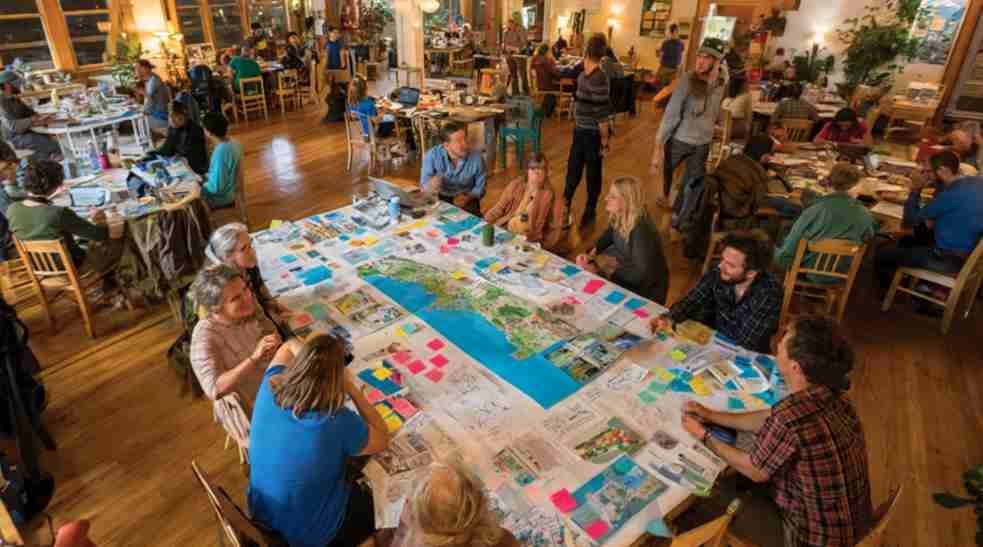
The best brainstorming rooms are not filled only with consultants and directors. They include people who live with the problem.
A teenager, parent, local shopkeeper, nurse, or community organizer may spot barriers that a formal report misses.
This is where workshop facilitation becomes useful. Tools like Miro, Mural, FigJam, Padlet, Google Workspace, Mentimeter, Slido, and SessionLab can help teams collect ideas, vote, map themes, and plan sessions.
In person, sticky notes, markers, visual timers, and structured methods like Liberating Structures can make quieter voices easier to include.
Prototype Before You Spend Big
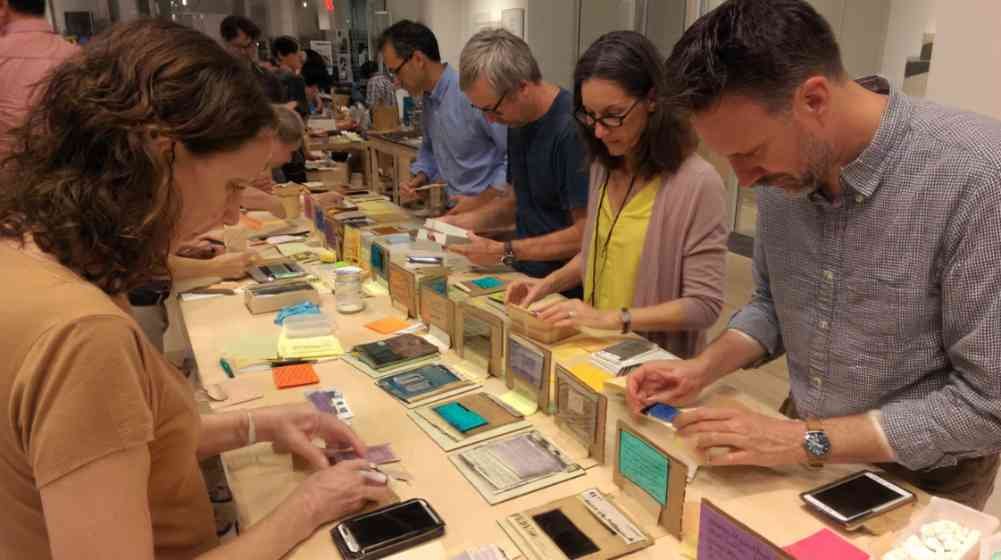
A prototype does not need to look finished. In social change, roughness is often better.
A team can prototype a clinic intake flow through roleplay. A food access team can test a market feedback station with cardboard signs. A public safety group can test SMS wording before building a full platform.
Stanford’s design thinking process guide explains that testing prototypes gives teams another chance to gain empathy and learn from users.
Test, Learn, and Improve in the Real Setting
Testing should happen where the solution will actually live. A workshop response does not always match real behavior.
People may praise an idea in a meeting and ignore it in daily life. That is not failure. That is data.
The goal is to observe workarounds, friction, confusion, and trust gaps before scaling.
Core Principles That Make Social Impact Design Work
Radical Empathy and Co-Creation
Radical empathy asks teams to slow down before solving. Co-creation asks them to share power.
The CDC’s public health work highlights community engagement as essential for building trust, and notes that communities should help co-design, implement, and evaluate programs they prioritize.
That is the heart of social impact design. Ownership improves when people shape the solution from the start, especially when projects respect cultural heritage and identity within the community.
Systems Thinking for Wicked Problems

A “wicked problem” has no clean edge. Food insecurity can involve wages, transport, school meals, grocery access, cultural food preferences, housing costs, and health conditions.
Systems thinking helps teams map these relationships. It prevents them from solving one visible symptom while ignoring the structure underneath.
Productive Failure Before Public Failure
Failure in social impact work carries real consequences. A failed large rollout can waste donor money and weaken trust.
Small failure is safer. Test the poster before printing 10,000 copies. Roleplay the intake process before training 80 staff members. Pilot the SMS reminder before buying software.
This is not about being cheap. It is about being responsible.
Workshop Facilitation Tools That Help Teams Co-Create
The right tool depends on the session.
For remote or hybrid workshops, Miro, Mural, and FigJam help teams map journeys, cluster ideas, and run design thinking exercises. For live input, Mentimeter, Slido, and Poll Everywhere help collect questions, votes, and sentiment from larger groups.
For synthesis, Padlet works well as a shared bulletin board. Trello can turn sticky-note ideas into tasks. Google Workspace keeps documents editable by many people at once.
For in-person sessions, I would still keep Post-it notes, Sharpie markers, and a Time Timer on the table. Simple tools reduce friction. People should spend energy thinking, not learning software.
A Worked Example: The Community Food Access Challenge
Imagine a nonprofit wants to reduce food insecurity in a low-income neighborhood.
A top-down approach might launch a weekly pantry. A design thinking team would first ask why existing food support is underused.
Field interviews may reveal that the pantry opens during work hours. Some residents feel stigma. Others lack transport. Parents may avoid unfamiliar food their children will not eat.
The team defines a better challenge: “How might we make food support easier, more dignified, and more useful for working families?”
They ideate with residents, local stores, school staff, and faith groups. Then they test three low-cost prototypes: evening pickup hours, discreet text-based ordering, and recipe cards using familiar ingredients.
After two weeks, the team sees that evening pickup increases participation, but text ordering confuses older residents. Recipe cards work best when community members write them.
That learning is more useful than a perfect plan built in isolation.
Common Mistakes to Avoid
The biggest mistake is treating empathy as a checkbox. One listening session is not deep community insight.
Another mistake is confusing participation with power. Asking for feedback after the main decisions are made is not co-creation.
Teams also rush to technology. A mobile app may sound innovative, but a paper sign-up sheet, SMS reminder, or trusted local ambassador may work better.
The final mistake is scaling too soon. A small pilot should prove behavior, not just interest.
FAQs
1. What is design thinking for social change?
Design thinking for social change is a human-centered method for solving social problems by working directly with affected communities. It uses empathy, problem definition, ideation, prototyping, testing, and iteration.
2. How does design thinking help nonprofits?
It helps nonprofits reduce guesswork, test ideas cheaply, include community voices, and build programs people are more likely to trust and use.
3. What are examples of social problems design thinking can address?
It can support work on food insecurity, clean water, healthcare access, education gaps, housing instability, climate resilience, public safety, and community trust.
4. What tools are best for social impact workshops?
For digital sessions, Miro, Mural, FigJam, Mentimeter, Slido, Padlet, Trello, and Google Workspace work well. For in-person work, sticky notes, markers, timers, and structured facilitation methods are often enough.
The Smart Impact Mic Drop
I trust social impact ideas more when they have dirt on their shoes. The best solutions rarely come from a conference room alone. They come from listening closely, testing early, and letting communities shape the work.
If you want to use design thinking well, start smaller than feels impressive. Sit with people. Map the system. Build the rough version. Test it where life actually happens. Then improve it before the big launch.
That is how good intentions become useful change.