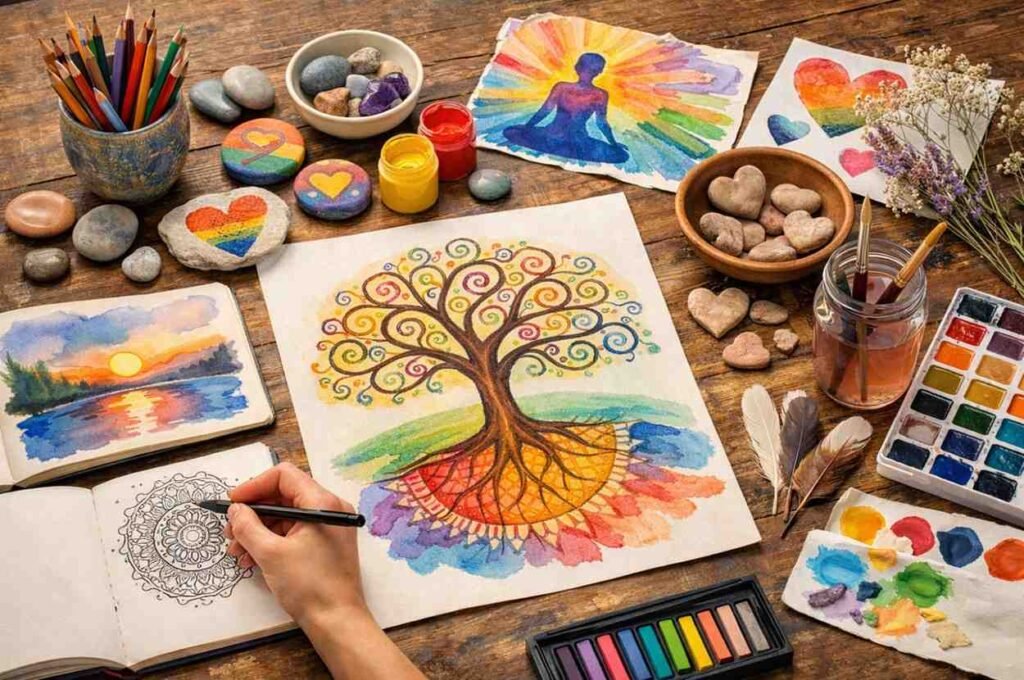
I used to think art had to look beautiful to be useful. Then I realized the real power of creative expression is not in the final picture. It is in what comes out while you are making it. That is why art therapy activities can feel so helpful when emotions are hard to explain.
These creative exercises use drawing, painting, collage, music, color, and simple visual prompts to process emotions, reduce anxiety, and improve self-awareness. You do not need special training or expensive supplies to begin. You only need a quiet space, basic materials, and a willingness to let the process matter more than artistic skill.
For people in the US dealing with work stress, school pressure, parenting overload, social anxiety, or emotional burnout, therapeutic art activities can offer a gentle way to slow down and reconnect with yourself.
What Makes Art Therapy Different From Regular Art?
Art therapy focuses on the inner process of creation. Regular art often aims for a finished result, but creative therapy activities help you notice what you feel, express what you cannot say, and reflect on what your mind may be holding.
In a clinical setting, a licensed art therapist guides the process. At home, you can use art therapy-inspired exercises for self-care, relaxation, and emotional reflection. They are not a replacement for professional mental health care, especially for trauma, depression, severe anxiety, or crisis situations, but they can support everyday emotional wellness.
Easy Supplies You Can Use at Home
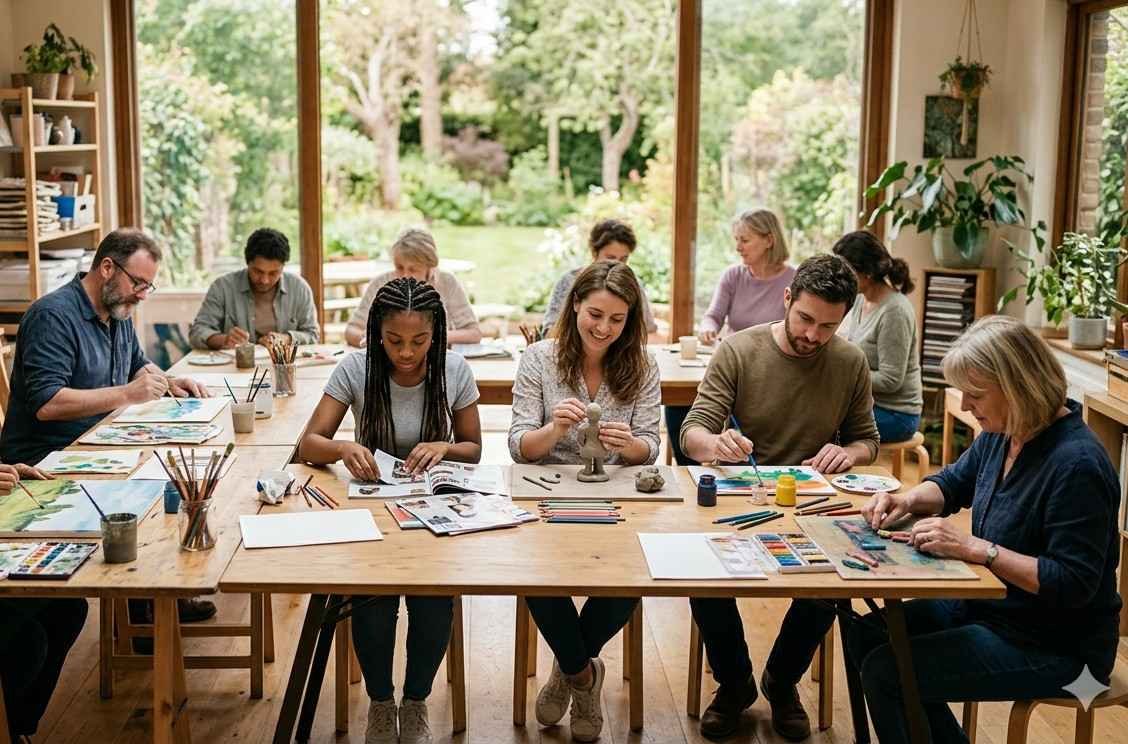
You can begin with paper, pencils, markers, crayons, watercolor paints, magazines, glue, scissors, clay, stickers, old photos, or a sketchbook. If you feel overwhelmed by too many choices, start with a pencil and one sheet of paper.
The best supplies are the ones that make you feel comfortable. If painting feels messy, draw. If drawing feels intimidating, try collage. If sitting still feels difficult, use clay or music-guided movement with color.
Art Therapy Exercises for Anxiety and Stress Relief
Neurographic Art for a Racing Mind
Neurographic art is a calming drawing exercise that works well when your thoughts feel tangled. Start by drawing freeform lines across a page. Let them curve, cross, and move without planning. Then round out the sharp intersections and fill the spaces with color.
This activity can feel soothing because your hand stays busy while your mind slows down. It is one of the best mindfulness art therapy activities for people who feel mentally overloaded after a long day.
Mindful Mandala Drawing
A mandala is a circular design that grows from the center outward. You can draw your own pattern or color a printed mandala. Choose colors that match your current mood and let the repetition guide your breathing.
The circle creates structure, while the colors give your feelings room to move. I like this exercise when I need grounding because it feels focused without feeling strict.
Pencil-Scribble Release
When stress builds up in the body, a clean journal page may feel too gentle. Pencil-scribble release gives that tension somewhere to go. Press hard with a pencil, crayon, or marker and scribble your stress onto the paper.
Afterward, you can crumple the page, tear it safely, or transform the scribble into a new image. This activity works especially well for frustration, anger, and emotional pressure.
Music-Guided Painting
Choose calming music, such as ambient, classical, soft jazz, or instrumental piano. Then paint or draw while letting your hand follow the rhythm. Do not plan the image. Let the music decide the speed, shape, and color.
Music-guided painting can help people who struggle to start because the sound gives the body a natural direction. It also turns emotional expression into movement.
Art Therapy Ideas for Self-Discovery and Reflection
The Emotions Wheel
Create a personal color chart that connects colors to emotional intensity. You might use pale blue for calm, bright yellow for hope, deep red for anger, gray for exhaustion, or purple for confusion.
Once you build your wheel, use it when words feel hard. Point to a color, shade a section, or write one sentence about why that color fits. This is a simple way to build emotional awareness over time.
The Grounding Tree
Draw a tree with deep roots, a strong trunk, and wide branches. In the roots, write your core values, such as honesty, family, faith, creativity, independence, or kindness. In the trunk, write what keeps you steady. In the branches, write your strengths.
This exercise helps you see yourself as rooted and growing, even during stressful seasons. It works well for adults, teens, and older kids who need a confidence-building activity.
Visual Safe Place
A visual safe place is a drawing of a real or imagined environment where you feel fully secure. It may be a beach, bedroom, forest, church, cabin, garden, library, or peaceful childhood memory.
Add colors, textures, sounds, and objects that make the place feel calm. You can return to this image during anxious moments as a visual reminder that safety can exist inside your imagination too.
Self-Compassion Collage
A self-compassion collage can help quiet a harsh inner critic. Look through magazines, printed images, or old cards and choose words, textures, and pictures that feel gentle, encouraging, or protective.
Arrange them into a collage that feels like a kind message to yourself. This is especially helpful when you feel stuck in self-judgment or perfectionism.
Therapeutic Art Activities for Processing and Letting Go

The Worry Container
Draw a backpack, jar, box, suitcase, or basket. Inside it, sketch or write the worries that keep taking up mental space. These may include money stress, family tension, health fears, school pressure, work deadlines, or relationship concerns.
Then decorate the outside of the container with symbols of strength, boundaries, or protection. This exercise does not erase problems, but it can help you gain emotional distance from them.
Unsent Postcard
Design a postcard for someone you feel anger, sadness, disappointment, or unfinished emotion toward. Write what you wish you could say, but do not mail it.
Decorate the front with colors and symbols that match the feeling. This art therapy prompt gives your emotions a private exit instead of keeping them trapped inside.
Metamorphosis Collage
Think of an old story, limiting belief, or painful label you want to release. Sketch it as a caterpillar. Then cut or tear the image apart and rearrange the pieces into a butterfly.
This activity turns letting go into something visual. It shows that transformation does not always mean starting from nothing. Sometimes, you rebuild from pieces of the past.
Art Therapy Activities for Kids, Teens, and Adults
The best thing about art therapy activities is that they can fit different age groups. Kids often respond well to emotional weather drawings, feelings of monsters, and safe place pictures. These prompts help them name emotions without needing adult-level vocabulary.
Teens may connect more with identity collage, mask-making, music-guided painting, and grounding tree drawings. These activities give them privacy, choice, and space to explore who they are becoming.
Adults often benefit from worry containers, unsent postcards, self-compassion collages, mandalas, and before-and-after feelings drawings. These exercises support stress relief, reflection, and emotional release without requiring a long time commitment.
How to Choose the Right Creative Therapy Activity
Choose the activity based on what you need right now. If anxiety feels high, try neurographic art, mindful mandala drawing, or a visual safe place. If you feel angry or tense, try a pencil-scribble release. If you feel disconnected from yourself, try the emotions wheel or grounding tree. If you need closure, try the worry container, unsent postcard, or metamorphosis collage.
I recommend starting with 15 minutes. Do not judge the final image. Ask what it shows you. The goal is not to create something impressive. The goal is to understand yourself better.
Safety Tips Before You Begin

Creative work can bring up strong emotions. If an exercise feels too intense, stop and ground yourself. Drink water, step outside, breathe slowly, or talk to someone you trust.
If you are processing trauma, grief, panic, depression, painful memories, or managing difficult emotions, consider working with a licensed therapist or certified art therapist. At-home art therapy exercises can support wellness, but professional care matters when emotions feel too heavy to manage alone.
Frequently Asked Questions (FAQs)
1. What are the best art therapy exercises for beginners?
The best beginner exercises include mindful mandala drawing, neurographic art, the emotions wheel, visual safe place, and self-compassion collage. These prompts feel simple, calming, and easy to start.
2. Can I do these activities at home?
Yes, you can do art therapy-inspired exercises at home using basic supplies. For deeper clinical support, especially around trauma or severe anxiety, work with a trained mental health professional.
3. What activities help with anxiety?
Neurographic art, mindful mandala drawing, music-guided painting, and the worry container can help with anxiety because they slow the mind and give worries a visual form.
4. Do I need to be good at drawing?
No. These exercises focus on expression, not skill. Your drawing can look messy, simple, abstract, or unfinished and still be meaningful.
5. What is a good art prompt for emotional healing?
A strong prompt is, “What feeling am I carrying today, and what shape or color would it have?” This opens the door to honest reflection without forcing perfect words.
A Creative Way Forward
When I use art therapy activities, I stop asking whether the page looks good and start asking what it is trying to tell me. That small shift can turn a simple drawing, collage, color choice, or even beginner-friendly gouache painting ideas into a moment of clarity.
You do not need to be an artist to begin. You only need one page, one color, and one honest feeling. From there, the process can help you slow down, release pressure, and understand yourself with more compassion.