
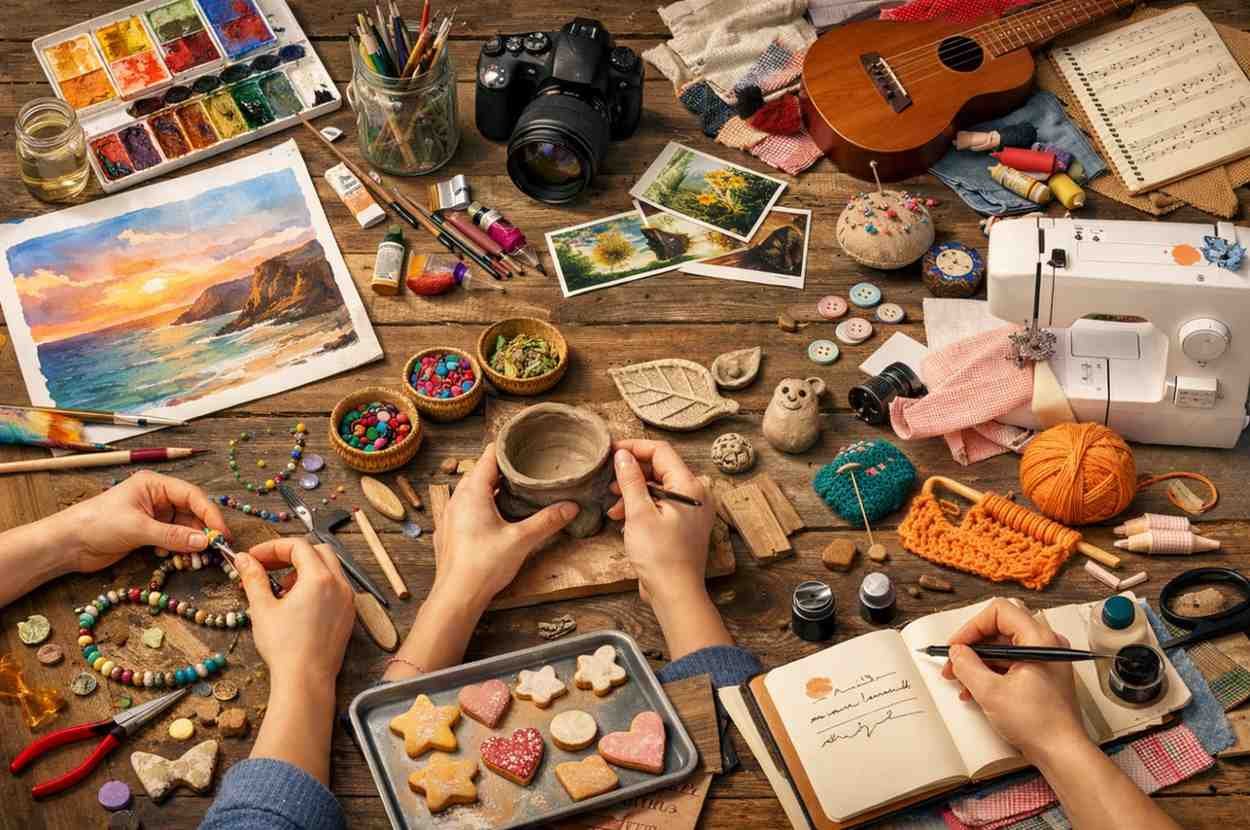
Finding the right creative hobbies can make your free time feel more meaningful, especially when your daily routine starts to feel repetitive. I know how easy it is to finish work, handle errands, eat dinner, and then lose an hour scrolling on your phone. That is why I love hobbies that help me slow down, use my hands, and create something I can actually feel proud of.
You do not need to be naturally artistic to begin. A creative hobby is not about being perfect. It is about exploring, learning, relaxing, and giving your mind a healthier place to focus. Whether you live in a small apartment, a college dorm, a suburban home, or a busy family household, there are plenty of hobby ideas that fit your space, budget, and lifestyle.
What Are Creative Activities and Why Do They Matter?
Creative activities are hobbies that let you make, design, write, decorate, shape, stitch, cook, build, or express something in your own way. They can include crochet, knitting, painting, pottery, hand embroidery, bullet journaling, bookbinding, candle making, floral arranging, baking, and even aquascaping.
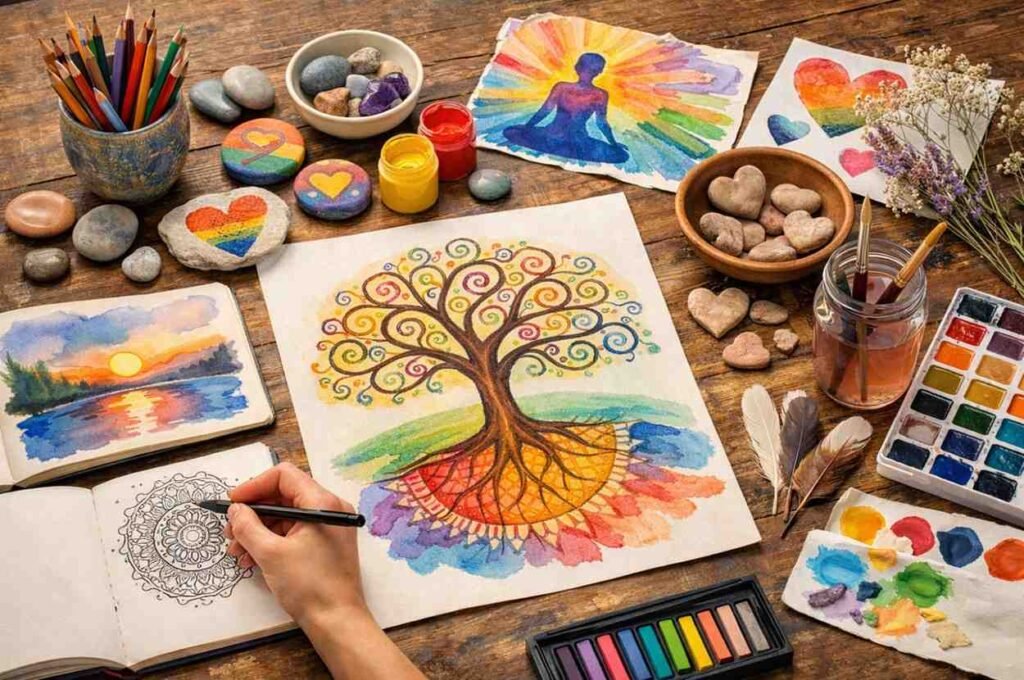
For many adults in the US, these hobbies offer a break from work pressure, digital fatigue, and packed schedules. Some people also use them like gentle art therapy activities because they encourage self-expression, focus, and emotional release. Instead of only consuming content, you get to make something personal. That small shift can feel refreshing because it gives your brain a sense of progress without the pressure of a deadline.
How to Choose the Best Hobby for Your Lifestyle
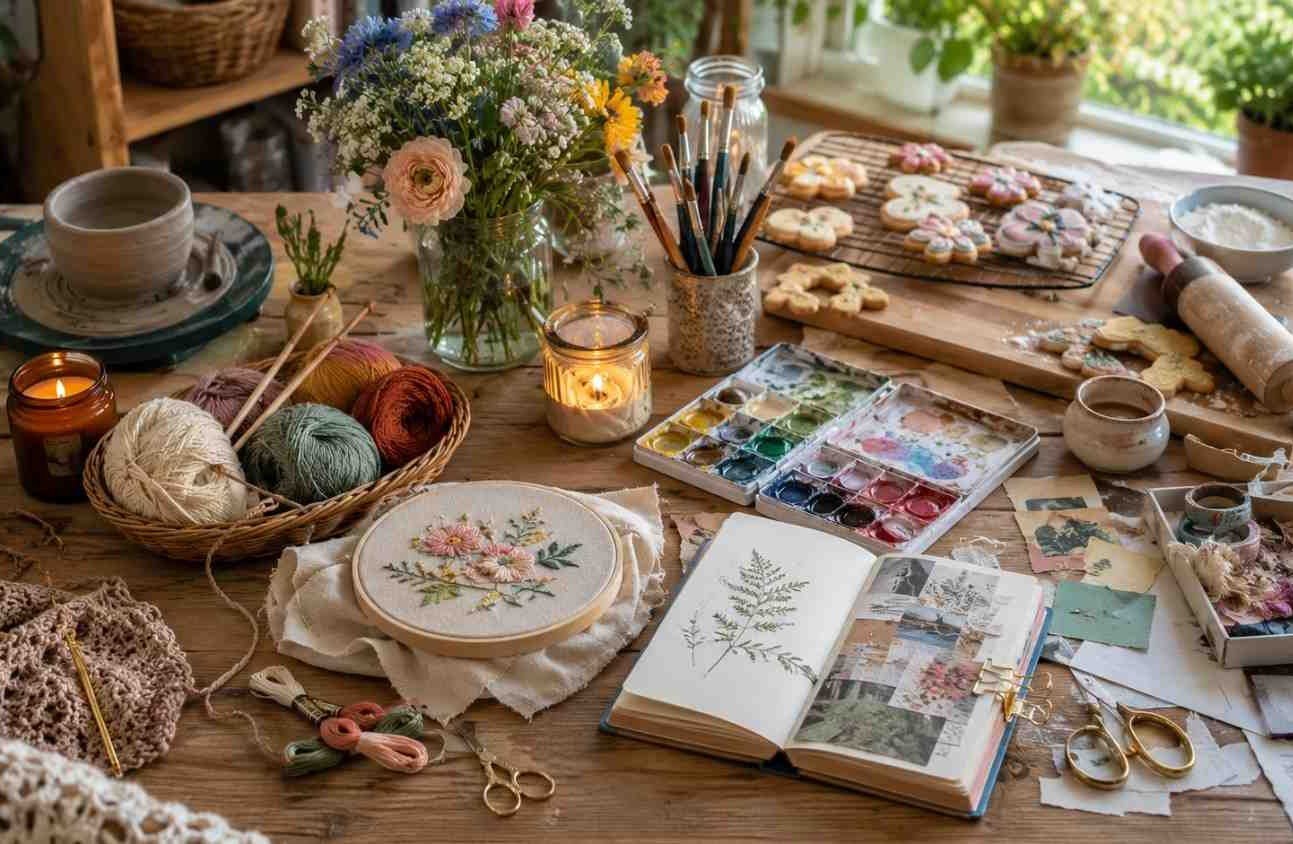
Before choosing a new hobby, I always ask one question: what do I want this activity to do for me? If you want something calming after work, choose knitting, watercolor painting, embroidery, macrame, or journaling. If you want something practical, try upcycling clothes, candle making, bookbinding, or baking.
Budget also matters. Some hobbies need very little to begin. Creative writing, collaging, bullet journaling, sketching, and paper crafts can start with items you already have at home. Other hobbies, such as pottery, aquascaping, linocut printing, or woodburning, may require tools, safety care, or a beginner class.
Your space should guide your choice too. If you have a small desk, try hand lettering, collaging, embroidery, or air-dry clay sculpting. If you have a garage, patio, or craft table, you may enjoy woodburning, sewing, pottery practice, or larger DIY home decor projects.
Fiber Arts and Crafts for Cozy Hands-On Projects
Fiber arts are perfect when you want texture, repetition, and a hobby that feels comforting. Crochet is one of the best beginner-friendly options because you only need a single hook and yarn. You can make scarves, tote bags, coasters, blankets, plush toys, and handmade gifts.
Knitting uses two needles to interlock yarn loops into fabric. It may feel tricky at first, but once you learn the rhythm, it becomes relaxing. Many beginners start with dishcloths, scarves, or simple blankets before moving to sweaters and more detailed projects.
Hand embroidery is another beautiful choice. You can stitch decorative patterns onto fabric and personalize tote bags, denim jackets, pillowcases, napkins, or framed art. Macrame also fits well in this category because it uses knotted cords to create wall hangings, plant holders, table runners, and boho-style decor.
Upcycling clothes adds a stylish and sustainable twist. Instead of throwing away old jeans, shirts, jackets, or dresses, you can reimagine them with sewing, patchwork, dye, embroidery, or fabric paint.
Visual Arts and Tactile Media for Creative Expression
Visual and tactile hobbies help you explore color, shape, texture, and form. Watercolor painting is a great place to start because it uses soft, translucent layers of color on paper. You can paint flowers, landscapes, fruit, pets, abstract designs, or simple greeting cards.
Pottery gives you a more physical creative experience. You can shape raw clay on a wheel or build pieces by hand. If you do not have access to a pottery studio, air-dry clay sculpting is an easier at-home option. You can make small dishes, jewelry trays, ornaments, figurines, and decorative bowls without using a kiln.
Linocut printing is ideal if you like bold designs. You carve a pattern into a block, roll ink across the surface, and press it onto paper or fabric. It works well for custom cards, wall prints, gift tags, and handmade stationery.
Woodburning, also called pyrography, uses a heated pen tool to etch designs into wood. You can decorate cutting boards, coasters, ornaments, signs, and keepsake boxes. Since it uses heat, I recommend treating it as an adult hobby and following safety instructions carefully.
Written and Paper Crafts for Quiet Creativity
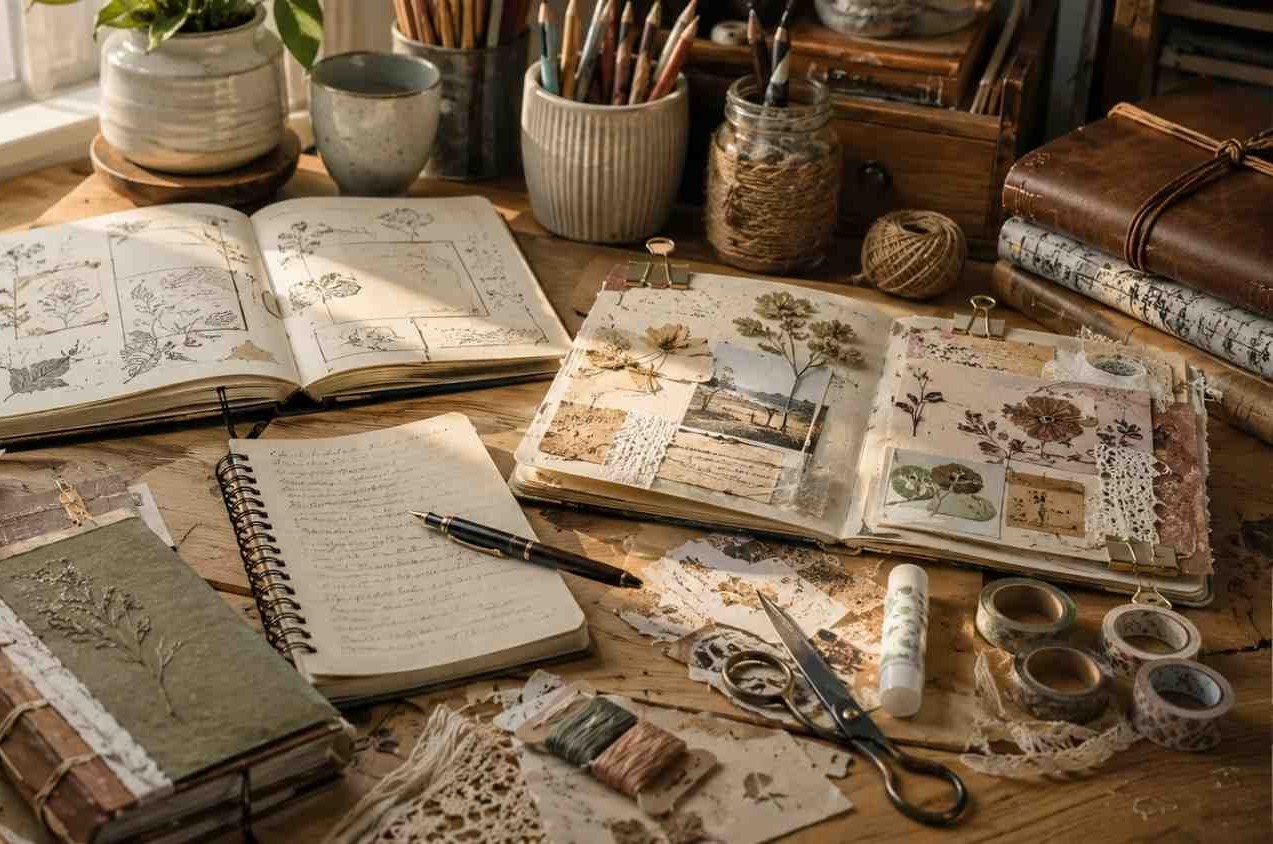
Written and paper-based hobbies work well if you enjoy planning, storytelling, memory keeping, or working at a desk. Bullet journaling combines scheduling, habit tracking, goal planning, doodling, and aesthetic hand lettering. It can help you stay organized while still giving you room to be creative.
Creative writing is one of the most affordable hobbies to start. You can write poetry, short stories, personal essays, fictional worlds, character sketches, or daily reflections. A notebook, laptop, or notes app is enough to begin.
Bookbinding is a beautiful hobby for people who love journals and paper goods. You can stitch paper sheets together to create custom notebooks, sketchbooks, planners, or memory books. Collaging is another low-pressure option. You can combine vintage papers, stickers, magazine clippings, photos, receipts, fabric scraps, and pressed flowers into junk journals or mood boards.
These creative hobbies are especially helpful if you want something quiet, affordable, and easy to do from your kitchen table, bedroom desk, or home office.
Culinary and Lifestyle Arts That Feel Useful and Fun
Culinary and lifestyle arts blend creativity with everyday living. Baking and cake decorating let you experiment with doughs, flavors, fillings, frostings, and detailed icing patterns. You can start with cookies or cupcakes, then move into layered cakes, decorated sugar cookies, breads, and seasonal desserts.
Candle making is another satisfying hobby because it lets you blend fragrance notes and pour custom wax into jars, tins, or molds. It works well for home decor lovers and anyone who enjoys handmade gifts.
Floral arranging teaches you how to balance color, height, shape, and texture using real blooms. You can design centerpieces for holidays, dinner tables, birthdays, or simple weekend refreshes at home.
Aquascaping is one of the most unique lifestyle arts. It involves designing living underwater landscapes inside glass tanks using aquatic plants, stones, driftwood, substrate, lighting, and fish or shrimp when appropriate. It takes patience and research, but the result can feel peaceful, artistic, and almost meditative.
Low-Cost Hobby Ideas You Can Start at Home
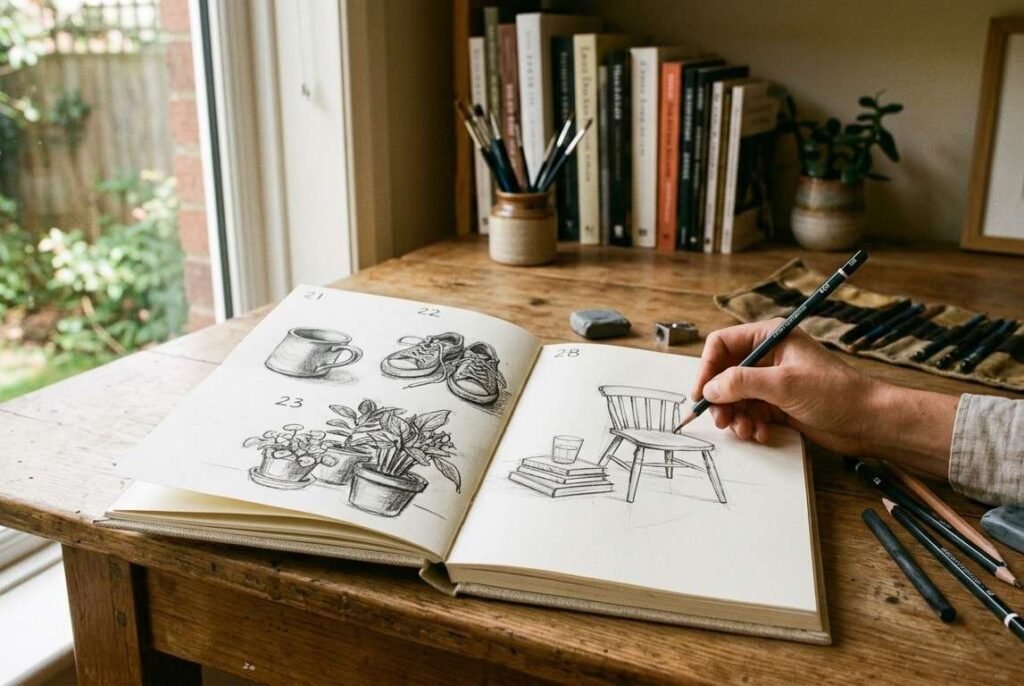
You do not need a huge craft room or expensive supply haul to start. If you want a budget-friendly option, begin with creative writing, sketching, collaging, bullet journaling, embroidery, watercolor painting, or upcycling clothes.
I always suggest starting small before buying advanced tools. A basic notebook, pencil, glue stick, thrifted fabric, old magazines, or a simple watercolor set can take you surprisingly far. This keeps the hobby fun and prevents it from becoming another expensive commitment.
Can Your Hobby Become a Side Hustle?
Some hobbies can grow into small income streams if you enjoy practicing and improving. Crochet products, embroidered items, candles, handmade cards, custom journals, pottery, floral arrangements, woodburned decor, baked goods, and upcycled clothing can all become sellable products.
Many people in the US sell handmade items through craft fairs, farmers markets, Etsy, Instagram, local community events, or personal websites. Still, I believe joy should come first.
Creative hobbies often work best as personal relaxation techniques before they become business ideas. When a hobby becomes only about money too quickly, it can lose the relaxing feeling that made you love it in the beginning.
A Simple 7-Day Hobby Challenge
If you feel unsure where to start, try testing a new activity for one week. Spend one day journaling, one day sketching, one day making a collage, one day trying a fiber craft, one day baking something new, one day painting or shaping clay, and one day choosing the activity you enjoyed most.
This approach removes pressure. You do not need to find your perfect hobby immediately. You only need to explore what feels fun, realistic, and relaxing in your current season of life.
Frequently Asked Question (FAQs)
1. What are the best hobbies for creative adults?
The best hobbies for creative adults include crochet, knitting, hand embroidery, watercolor painting, pottery, bullet journaling, creative writing, candle making, baking, floral arranging, upcycling clothes, and bookbinding. These options work well because they fit different budgets, schedules, and skill levels.
2. What hobbies can I do at home with limited space?
You can try bullet journaling, collaging, embroidery, creative writing, watercolor painting, air-dry clay sculpting, candle making, knitting, crochet, bookbinding, and macrame at home. Most of these only need a small table, desk, or storage basket.
3. What is the easiest artistic hobby to start?
Creative writing, bullet journaling, collaging, sketching, and watercolor painting are among the easiest artistic hobbies to start. They need simple supplies and allow you to learn without pressure.
4. Which hobbies are best for stress relief?
Knitting, crochet, embroidery, macrame, journaling, watercolor painting, floral arranging, baking, and aquascaping can help you slow down and focus on one calming task at a time.
5. Which hobbies can make money?
Crochet, candle making, pottery, embroidery, bookbinding, baking, floral arranging, woodburning, handmade cards, and upcycled clothing can become side hustles with practice, quality work, and the right audience.
A Creative Takeaway
The best creative hobbies are the ones you can enjoy in your real life. You do not need perfect tools, natural talent, or hours of free time. You only need one small project that makes you feel curious again.
Start with what feels easy. Let yourself be a beginner. Over time, that small creative habit can become a relaxing routine, a confidence boost, or even a skill you are proud to share.